
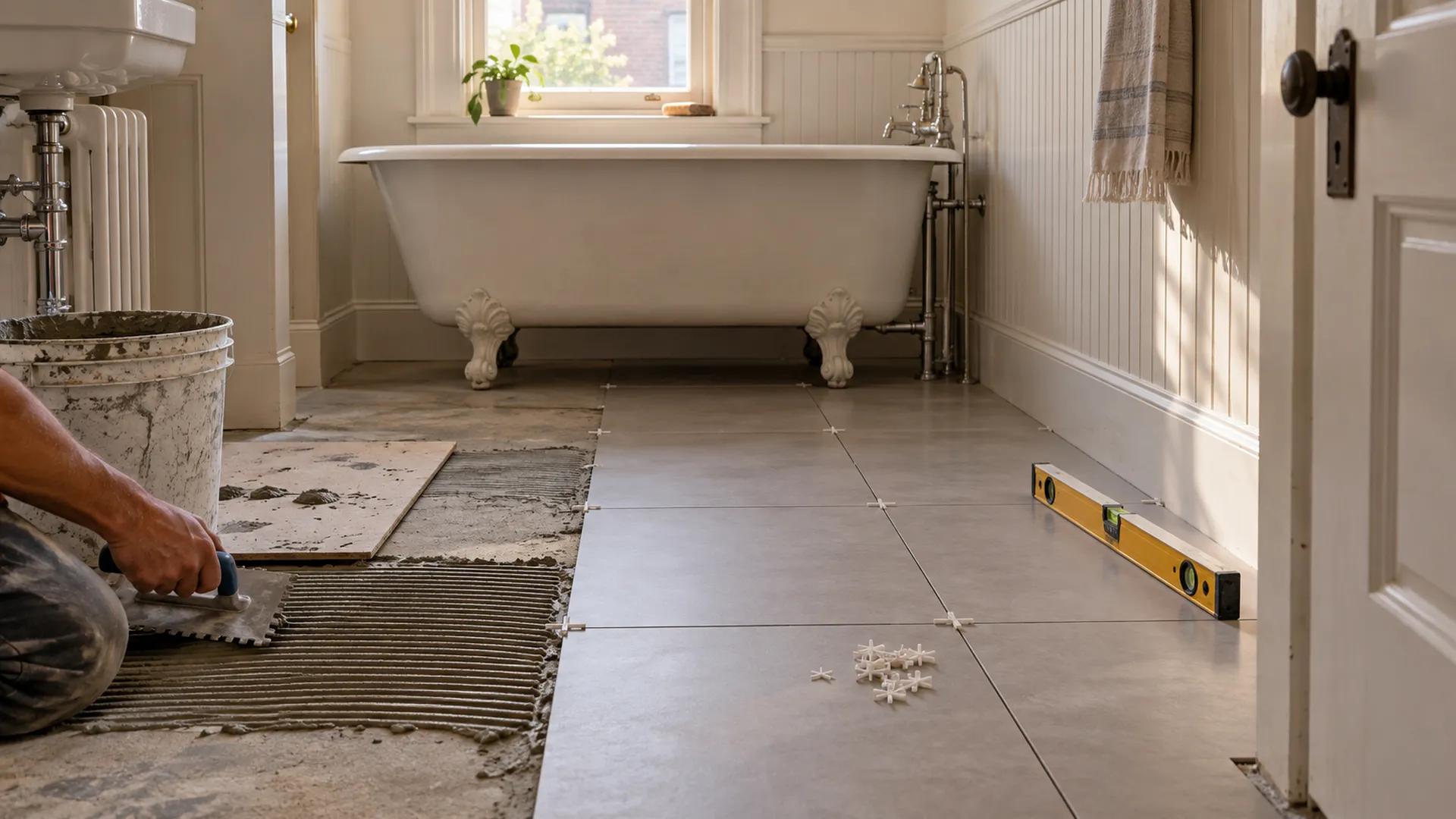
Tile flooring in Brooklyn, set on a floor that stays put
Porcelain and ceramic floor tile for Brooklyn bathrooms, kitchens, entries and basements, laid over a base we have stiffened and leveled first.
A tile floor is only as good as the floor under it. In an old Brooklyn house, that is where most tile jobs go wrong.
Brownstones and row houses in Brooklyn mostly have wood joists and plank subfloors that have moved for a century. Tile is rigid. Laid on a floor that flexes, the grout cracks first and the tiles follow. So before any tile goes down we check how much the floor moves, add plywood or a backer board where it needs stiffening, and bring it flat.
We install porcelain and ceramic floor tile in bathrooms, kitchens, entries, laundry rooms and basements across Brooklyn, in houses, co-ops and condos.
Chose your tile at a showroom? Good. Now the layout
Most Brooklyn tile jobs start with a tile somebody has already fallen for. Before we set it, we plan the layout on the floor: where the first row starts so the cuts at the walls are even, how the pattern meets the tub or the vanity, and where the tile stops at the doorway. Big tiles and long rectangular tiles need more planning, because every dip in the floor shows at their edges.
If you have not chosen yet, we will talk through what suits the room. Porcelain is the hardest wearing and the best choice for a bathroom or an entry that sees wet boots. Ceramic suits a lighter-use room. A matte or textured finish grips better underfoot where water lands.
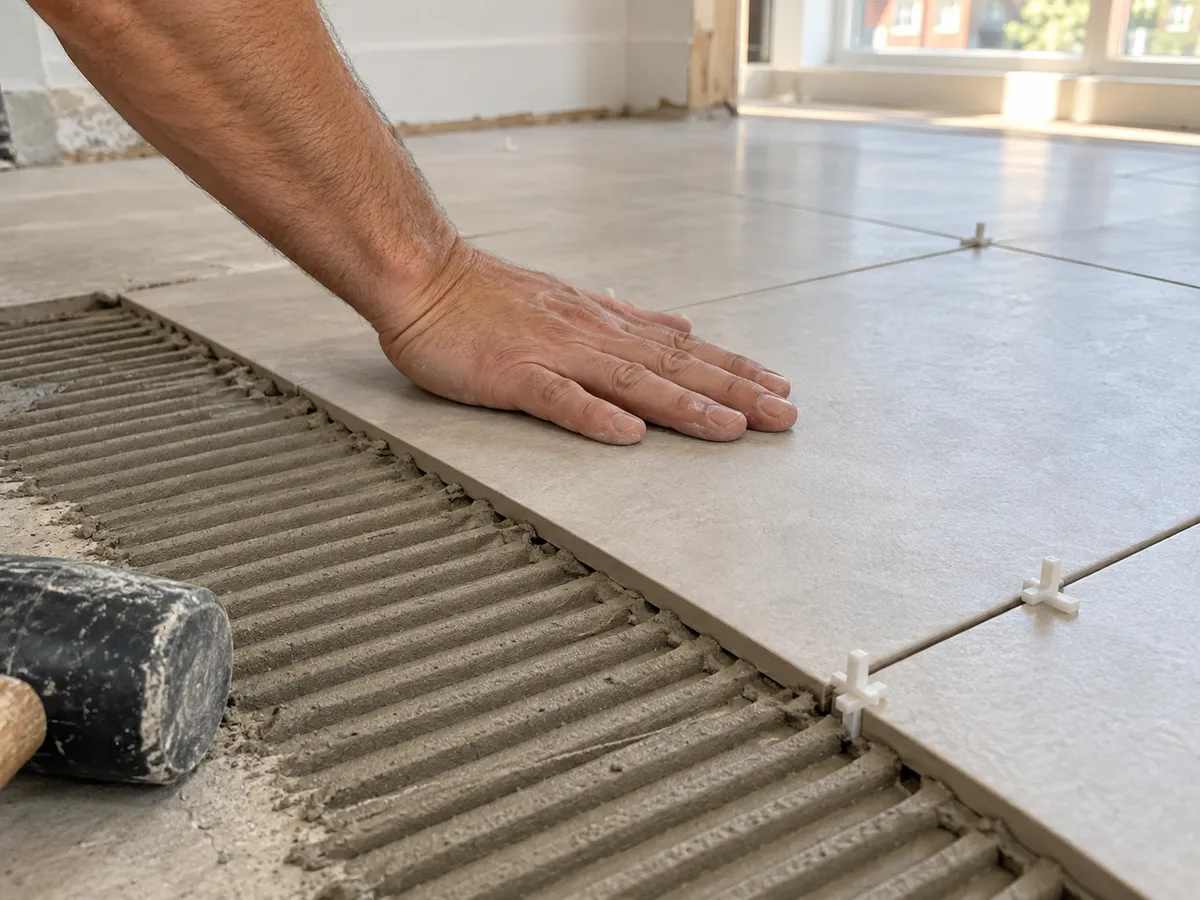
Brooklyn bathrooms and the floor underneath
A bathroom on the top floor of a brownstone or a two-family house often has old tile over old tile, or a mortar bed poured decades ago. We take the floor back to something sound before we start. Where the old floor is small hexagon or square tile set in mortar and still solid, we sometimes tile over it after checking the height at the door and the toilet flange.
Very old 9-inch floor tiles and black adhesive can contain asbestos. They are tested before anyone takes them up, and covering them with a new floor is often the simpler choice.
What a tile floor from us includes
Checking the base
We measure how flat the floor is and how much it flexes, and fix both before tiling.
Planning the layout
We set out the rows so the cuts at the walls and doorways are even and balanced.
Setting the tile
Each tile is set in mortar with full contact underneath, so it does not sound hollow or crack.
Grout and edges
We grout, seal where the tile needs it, and finish the doorway with a clean transition.
How a tile job runs
Take up and prepare
The old floor comes up where it needs to, and the base is stiffened and leveled.
Lay out and set
The layout is marked and the tile is set in mortar, row by row.
Cure and grout
The mortar cures, then the joints are grouted and cleaned.
Walk on it
Most floors can take light foot traffic the next day and full use a few days later.
What moves the price of a tile floor
The size of the room matters less than you might think. The work under the floor matters more: taking up old tile, stiffening a bouncy subfloor and leveling a slope all take time. Large tiles and patterns like herringbone take longer to lay than a simple straight lay, and a small bathroom has more cuts per square foot than a kitchen. We look at the floor first and give you an estimate for the whole job.
Tile floor questions from Brooklyn
Can you put new tile over my old bathroom tile?
Sometimes. If the old tile is solid, flat and well bonded, new tile can go over it, as long as the added height works at the door, the toilet and the tub. If it is loose, cracked or hollow in places, it has to come up first. We check before we decide.
How long before I can walk on a new tile floor?
Light foot traffic is usually fine the next day, once the mortar has set. Give it a few days before heavy furniture goes back or the room gets full use. We tell you the timing for your floor before we start.
Can tile go on the wood floor of an old Brooklyn house?
Yes, once the floor is stiff enough. Old joists and plank subfloors flex, so we add plywood or a cement backer board to stiffen them before tiling. Skipping that step is why tile cracks in old houses.
How much does tile flooring cost to install in Brooklyn?
It depends mostly on the work under the floor, the size and pattern of the tile and how many cuts the room needs. We measure and check the base first, then give you one estimate that covers everything.
Tile picked out? Let us look at the floor.
Send the room size, a photo of the floor and the tile you chose.